We are dedicated to providing a comprehensive resource for the trade community to explore the frameworks, benefits, and costs of trade and investment policy. Here, you’ll find curated research, polling, economic studies, and actionable data that inform the ongoing conversation around tariffs and trade policy.
Trade & American Prosperity
Learn how trade drives American growth.
What is the Value of US Trade
USA Facts
July 2026
The Benefits of International Trade
U.S. Chamber of Commerce
September 2025
Latest Polling
See what Americans think about trade and tariff policy.
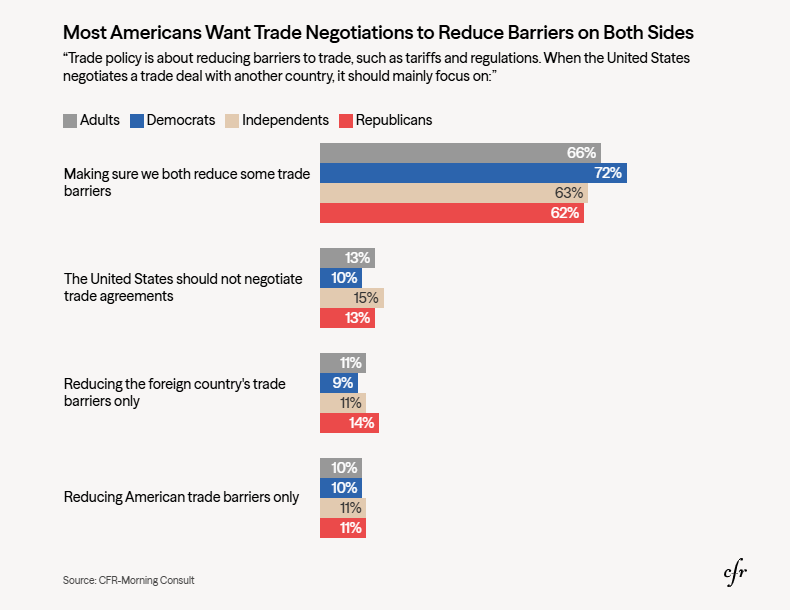
Before the Midterms: What Americans Really Think About Trade & Tariffs
Council on Foreign Relations
October 2026
American Views on Tariff Policy
Pew Research Center
February 2026
Into the Cross-Tabs
New York Times
June 2026
Gen Z and Millennial Views on Tariffs
Chicago Council on Global Affairs
March 2026
Quantifying the Impact of Tariffs
See the latest reports on the impact of trade.
Who Pays for Tariffs
Peterson Institute of International Economics (PIIE)
August 2026
Tracking the Economic Effects of Tariffs
Yale Budget Lab
April 2026
More Tariff Pass-Through is in the Pipeline
Federal Reserve Bank of New York
July 2026
The Tariff Costs Are Worse Than You Think
Council on Foreign Relations
May 2025
Resources
Useful resources to monitor global trade flows and impacts.
Trump Tariff Tracker
Atlantic Council
Brookings USMCA Tracker
Brookings Institution
Tracking Trade
The Hamilton Project
Tariff Tracker
HBS Pricing Lab

NFTC on Trade
The National Foreign Trade Council (NFTC) advances trade policies that support access to the global economy, taking a leadership role on behalf of the business community to emphasize the costs of tariffs to American businesses and workers and help members navigate trade barriers and regulatory challenges.
The NFTC also leads the Tariff Reform Coalition (TRC), a broad-based alliance of trade associations representing the many U.S. manufacturers, exporters, retailers, agricultural and food producers and other supply chain stakeholders adversely affected by the Section 232 and Section 301 tariffs.